The full text: Sanskrit and transliteration
The stotra is given here as it commonly circulates for recitation: two opening dhyāna (meditation) verses describing the Goddess's form, followed by the fifteen verses of praise proper. Read it through once before turning to the meanings.
ध्यानम् / Dhyānam
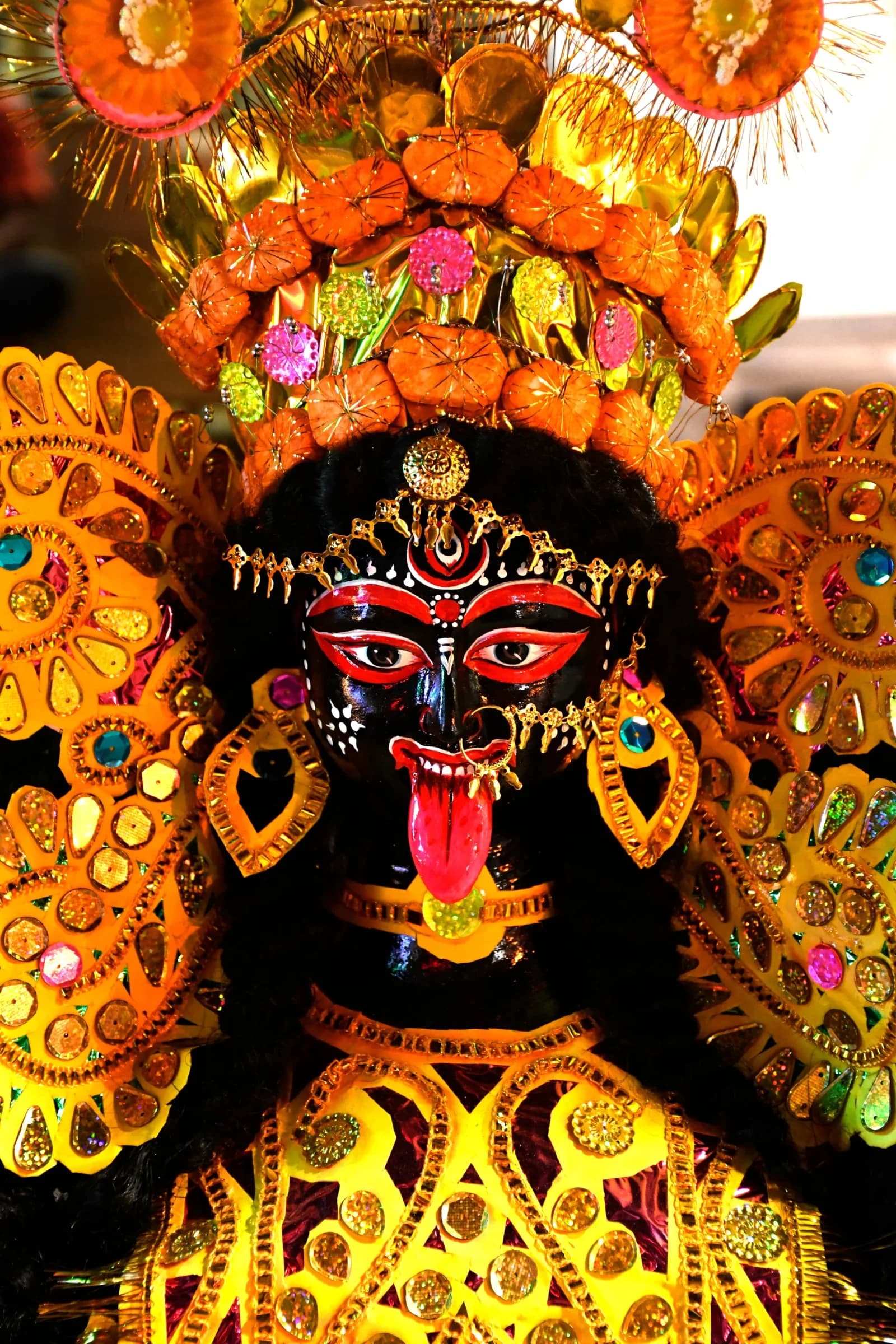
शवारूढां महाभीमां घोरदंष्ट्रां वरप्रदां हास्ययुक्तां त्रिणेत्राञ्च कपाल कर्त्रिका कराम् । मुक्तकेशीं ललज्जिह्वां पिबन्तीं रुधिरं मुहुः चतुर्बाहुयुतां देवीं वराभयकरां स्मरेत् ॥
śavārūḍhāṃ mahābhīmāṃ ghōradaṃṣṭrāṃ varapradāṃ hāsyayuktāṃ triṇētrāñcha kapāla kartrikā karām. muktakēśīṃ lalajjihvāṃ pibantīṃ rudhiraṃ muhuḥ chaturbāhuyutāṃ dēvīṃ varābhayakarāṃ smarēt.
शवारूढां महाभीमां घोरदंष्ट्रां हसन्मुखीं चतुर्भुजां खड्गमुण्डवराभयकरां शिवाम् । मुण्डमालाधरां देवीं ललज्जिह्वां दिगम्बरां एवं सञ्चिन्तयेत्कालीं श्मशनालयवासिनीम् ॥
śavārūḍhāṃ mahābhīmāṃ ghōradaṃṣṭrāṃ hasanmukhīṃ chaturbhujāṃ khaḍgamuṇḍavarābhayakarāṃ śivām. muṇḍamālādharāṃ dēvīṃ lalajjihvāṃ digambarāṃ ēvaṃ sañchintayētkāḻīṃ śmaśanālayavāsinīm.
स्तोत्रम् / Stotram
विश्वेश्वरीं जगद्धात्रीं स्थितिसंहारकारिणीम् । निद्रां भगवतीं विष्णोरतुलां तेजसः प्रभाम् ॥ १ ॥ viśvēśvarīṃ jagaddhātrīṃ sthitisaṃhārakāriṇīm. nidrāṃ bhagavatīṃ viṣṇōratulāṃ tējasaḥ prabhām.
त्वं स्वाहा त्वं स्वधा त्वं हि वषट्कारः स्वरात्मिका । सुधा त्वमक्षरे नित्ये त्रिधा मात्रात्मिका स्थिता ॥ २ ॥ tvaṃ svāhā tvaṃ svadhā tvaṃ hi vaṣaṭkāraḥ svarātmikā. sudhā tvamakṣarē nityē tridhā mātrātmikā sthitā.
अर्थमात्रास्थिता नित्या यानुच्चार्या विशेषतः । त्वमेव सन्ध्या सावित्री त्वं देवी जननी परा ॥ ३ ॥ arthamātrāsthitā nityā yānuchchāryā viśēṣataḥ. tvamēva sandhyā sāvitrī tvaṃ dēvī jananī parā.
त्वयैतद्धार्यते विश्वं त्वयैतद्सृज्यते जगत् । त्वयैतत्पाल्यते देवि त्वमत्स्यन्ते च सर्वदा ॥ ४ ॥ tvayaitaddhāryatē viśvaṃ tvayaitadsṛjyatē jagat. tvayaitatpālyatē dēvi tvamatsyantē cha sarvadā.
विसृष्टौ सृष्टिरूपा त्वं स्थितिरूपा च पालने । तथा संहृतिरूपान्ते जगतोऽस्य जगन्मये ॥ ५ ॥ visṛṣṭau sṛṣṭirūpā tvaṃ sthitirūpā cha pālanē. tathā saṃhṛtirūpāntē jagatō'sya jaganmayē.
महाविद्या महामाया महामेधा महास्मृतिः । महामोहा च भवती महादेवी महेश्वरी ॥ ६ ॥ mahāvidyā mahāmāyā mahāmēdhā mahāsmṛtiḥ. mahāmōhā cha bhavatī mahādēvī mahēśvarī.
प्रकृतिस्त्वं च सर्वस्य गुणत्रयविभाविनी । कालरात्रिर्महारात्रिर्मोहरात्रिश्च दारुणा ॥ ७ ॥ prakṛtistvaṃ cha sarvasya guṇatrayavibhāvinī. kālarātrirmahārātrirmōharātrīśchа dāruṇā.
त्वं श्रीस्त्वमीश्वरी त्वं ह्रीस्त्वं बुद्धिर्बोधलक्षणा । लज्जा पुष्टिस्तथा तुष्टिस्त्वं शान्तिः क्षान्तिरेव च ॥ ८ ॥ tvaṃ śrīstvamīśvarī tvaṃ hrīstvaṃ buddhirbōdhalakṣaṇā. lajjā puṣṭistathā tuṣṭistvaṃ śāntiḥ kṣāntirēva cha.
खड्गिनी शूलिनी घोरा गदिनी चक्रिणी तथा । शङ्खिनी चापिनी बाणभुशुण्डीपरिघायुधा ॥ ९ ॥ khaḍginī śūlinī ghōrā gadinī chakriṇī tathā. śaṅkhinī chāpinī bāṇabhuśuṇḍīparighāyudhā.
सौम्या सौम्यतराशेषा सौम्येभ्यस्त्वतिसुन्दरी । परापराणां परमा त्वमेव परमेश्वरी ॥ १० ॥ saumyā saumyatarāśēṣā saumyēbhyastvatisundarī. parāparāṇāṃ paramā tvamēva paramēśvarī.
यच्च किञ्चित् क्वचिद्वस्तु सदसद्वाखिलात्मिके । तस्य सर्वस्य या शक्तिः सा त्वं किं स्तूयसे तदा ॥ ११ ॥ yachcha kiñchit kvachidvastu sadasadvākhilātmikē. tasya sarvasya yā śaktiḥ sā tvaṃ kiṃ stūyasē tadā.
यया त्वया जगत्स्रष्टा जगत्पात्यत्ति यो जगत् । सोऽपि निद्रावशं नीतः कस्त्वां स्तोतुमिहेश्वरः ॥ १२ ॥ yayā tvayā jagatsraṣṭā jagatpātyatti yō jagat. sō'pi nidrāvaśaṃ nītaḥ kastvāṃ stōtumihēśvaraḥ.
विष्णुः शरीरग्रहणमहमीशान एव च । कारितास्ते यतोऽतस्त्वां कः स्तोतुं शक्तिमान् भवेत् ॥ १३ ॥ viṣṇuḥ śarīragrahaṇamahamīśāna ēva cha. kāritāstē yatō'tastvāṃ kaḥ stōtuṃ śaktimān bhavēt.
सा त्वमित्थं प्रभावैः स्वैरुदारैर्देवि संस्तुता । मोहयैतौ दुराधर्षावसुरौ मधुकैटभौ ॥ १४ ॥ sā tvamitthaṃ prabhāvaiḥ svairudārairdēvi saṃstutā. mōhayaitau durādharṣāvasurau madhukaiṭabhau.
प्रबोधं च जगत्स्वामी नीयतामच्युतो लघु । बोधश्च क्रियतामस्य हन्तुमेतौ महासुरौ ॥ १५ ॥ prabōdhaṃ cha jagatsvāmī nīyatāmachyutō laghu. bōdhaścha kriyatāmasya hantumētau mahāsurau.
इति श्री महाकाली स्तोत्रम् । iti śrī mahākāḻī stōtram.
Meaning & interpretation, verse by verse
With the full recitation given above, here is an original meaning for each verse — read as a devotional and philosophical interpretation, not a strict word-for-word crib.
Dhyānam (meditation verses)
Seated upon a corpse, immense and fearsome, her fangs bared, yet her hand held open in blessing; three-eyed, laughing, a skull and a curved blade in her grasp; hair loose and unbound, tongue lolling as she drinks again and again of blood — four-armed, one hand offering boons and another offering safety: it is on this form that the meditator is asked to fix the mind.
Again on a corpse, vast and terrible, her face breaking into laughter even with those dreadful teeth; four arms holding sword and severed head, one hand blessing and one hand stilling fear — and for all this, Śivā, the auspicious one; garlanded in skulls, tongue lolling, wearing the sky itself as her only garment. Thus is Kālī to be held in thought — she who is at home in the cremation ground.
Stotram
- Sovereign of the universe, bearer of all creation, the one who both sustains it and dissolves it; Viṣṇu's own sleep, the Blessed Goddess — a brilliance beyond all comparison.
- You are Svāhā, the word that carries an offering to the gods; you are Svadhā, the word that carries it to the ancestors; you are the ritual utterance Vaṣaṭ itself, the very substance of sacred sound. You are nectar, eternal and unchanging — abiding as the threefold syllable that makes up Oṃ.
- You are that eternal trace of meaning which lies beyond ordinary speech, resisting utterance even by those who try hardest to voice it. You yourself are the twilight, the Sāvitrī, the Goddess who is mother beyond all mothers.
- By you this universe is upheld; by you this world is brought into being; by you, Goddess, it is protected — and it is you, always, who takes it back at the very end.
- At the moment of creation you take the form of creation itself; through the long middle of things you are the form of what preserves them; and at the last you are dissolution's own form — you who are, in truth, this world through and through.
- Great wisdom and great illusion, great intellect and great memory, and great delusion too — all of this is you, great Goddess, great Sovereign.
- You are Prakṛti, the raw nature underlying everything, playing out through its three strands; you are the Night of Time, the Great Night of ending, and the fearsome Night of delusion.
- You are fortune and you are sovereignty; you are modesty and you are the very mark of a discerning intellect; you are dignity, nourishment, and contentment — and you are peace, and patience besides.
- Sword in hand, trident in hand, terrible to behold; mace-bearer, discus-bearer; conch-bearer, bow-bearer, armed too with arrow, with the ancient fire-weapon, and with an iron bar.
- Gentle, and gentler still than every gentle thing there is; more lovely than loveliness itself. Highest among all things high and low — you alone are the Supreme.
- Whatever exists, anywhere, in any form — real or unreal — O soul of everything, whatever power lets that thing be at all, that power is you. What praise, then, could possibly reach you?
- By you, even he who creates this world, sustains it, and finally consumes it, is drawn under the spell of sleep. Who, then, has the standing to praise you?
- Viṣṇu's taking of a body, mine — Brahmā's — and Śiva's as well: all of it happens at your bidding. So who could ever hold the power to praise you rightly?
- You, then, O Goddess, praised here through your own vast and generous powers — now cast your spell over these two unconquerable demons, Madhu and Kaiṭabha.
- Let Acyuta, the unwavering lord of the world, be swiftly brought back to waking; let his awareness be roused, so that he may destroy these two great demons.
Thus ends the Śrī Mahākāḷī Stotram.
A hymn spoken before the world properly wakes
Most of the mantras and chalisas on this journal are prayers spoken by a devotee to a deity felt as close and personal — Hanuman at the gate, Sāvitṛ at dawn. This one is different in kind. It is not a devotee's prayer at all: it is one god, Brahmā, addressing another — the Goddess who holds even Viṣṇu in sleep — because there is, in this moment of the story, no one else left who can act. Read this way, the stotra is less a request for personal grace and more a philosophical hymn about what power actually underlies the visible gods themselves.
Origin: the Devi Mahatmya and the sleep of Vishnu
These verses belong to the first chapter of the Devi Mahatmya (also called the Durga Saptashati or Chandi Path), itself embedded within the Markandeya Purana. Scholars generally place the Devi Mahatmya's composition somewhere in the middle centuries of the first millennium CE, though, as with most Puranic material, an exact date is not something the text itself settles.
The narrative frame is this: at the end of a cosmic age, Viṣṇu lies in yogic sleep upon the primordial waters. Two demons, Madhu and Kaiṭabha, arise and threaten Brahmā, who is seated on the lotus growing from Viṣṇu's navel. Unable to wake Viṣṇu himself, Brahmā recognises that Viṣṇu's sleep is itself a form of the Goddess — she is Yoganidrā, "the sleep of yoga," also called Mahāmāyā — and so he turns his praise to her instead, asking her to withdraw from Viṣṇu so that he may wake and fight. This section is traditionally called the Tantrokta Rātri Sūktam (the tantric hymn to the Night), to distinguish it from an older, unrelated hymn to Night in the Rigveda. The verses above are Brahmā's praise, and the closing lines are his direct request: release Viṣṇu, so the two demons can finally be defeated.
Two kinds of verse in one stotra
It's worth noticing that the two opening dhyāna verses and the fifteen verses that follow are not quite the same kind of text. The dhyāna verses — the corpse, the skull, the lolling tongue, the sky as a garment — describe Kālī's iconographic form in the manner common to many Tantric meditation verses used to open worship of the Goddess, and are widely prefixed to Kālī-related stotras from more than one source. The fifteen verses of the stotram proper are the Devi Mahatmya passage itself, and their content is markedly more abstract: rather than describing a form, they identify the Goddess with underlying principles — ritual speech, the three guṇas, the syllables of Oṃ, the very capacity of anything to exist at all. Whether this specific pairing of dhyāna-plus-stotram was assembled exactly this way in antiquity, or is a later convention of anthologies compiling verses for recitation, is worth treating as an open question rather than a settled fact — see the note at the end of this piece.
Reading the hymn as a whole
Two things happen at once in this stotra. On one level, it identifies the Goddess with familiar personifications from the wider tradition — Śrī, Sāvitrī, Sandhyā — the sort of praise one might expect for any great goddess. On another, more unusual level, it makes a much larger claim: that this Goddess is the ground beneath Brahmā, Viṣṇu, and Śiva themselves, the power without which even the gods who create, sustain, and dissolve the universe cannot act. Verses 12 and 13, where Brahmā admits that Viṣṇu's very embodiment, and his own, and Śiva's, occur only "at your bidding," are the philosophical heart of the piece: the hymn is not describing one deity among many, but the substrate that makes divine agency possible at all.
Spiritual and traditional significance
Within the wider Devi Mahatmya, this stotra marks the turning point of its very first story — the moment where cosmic order, thrown into danger, is restored not by force but by the Goddess simply choosing to withdraw her hold on Viṣṇu. The Devi Mahatmya as a whole is recited widely during Navarātri, particularly as part of the Chandi Path, and this opening chapter is traditionally read on the first day of that observance, functioning as an invocation before the narrative's better-known middle episodes — Durga's battle with Mahiṣāsura among them — begin.
Because the verses describe the Goddess through abstraction rather than narrative (guṇas, ritual utterances, the syllables of speech itself) rather than through a single fixed story, this stotra tends to sit more naturally alongside Tantric and philosophical material than alongside simpler devotional hymns — which is part of why it's placed here under Tantra rather than Mantras, though a reasonable case could be made either way.
Practice note. As with the other texts on this journal, the transliteration above favours readability over the finer diacritical precision a scholarly edition would use, and is offered for study and personal reflection rather than as a substitute for training under a teacher. Because this stotra sits close to Tantric recitation practice, anyone drawn to formal use of it — as part of Chandi Path, or otherwise — should learn its proper context, sequence, and etiquette from within that living tradition, rather than from text alone.
Sources & references
Sources & references
- Devi Mahatmya — Wikipedia, for the chapter structure of the text and the Madhu-Kaitabha episode.
- Sri Maha Kali Stotram, Sanskrit and transliteration — Shlokam.org, used to verify the Sanskrit and transliteration reproduced above.
- Durga Saptashati, chapter summaries — eSamskriti, for the narrative context of Brahma's praise of Yoganidra.
- Devi Mahatmya, Chapter 1 — Green Message, for the traditional naming of this section as the *Tantrokta Ratri Suktam