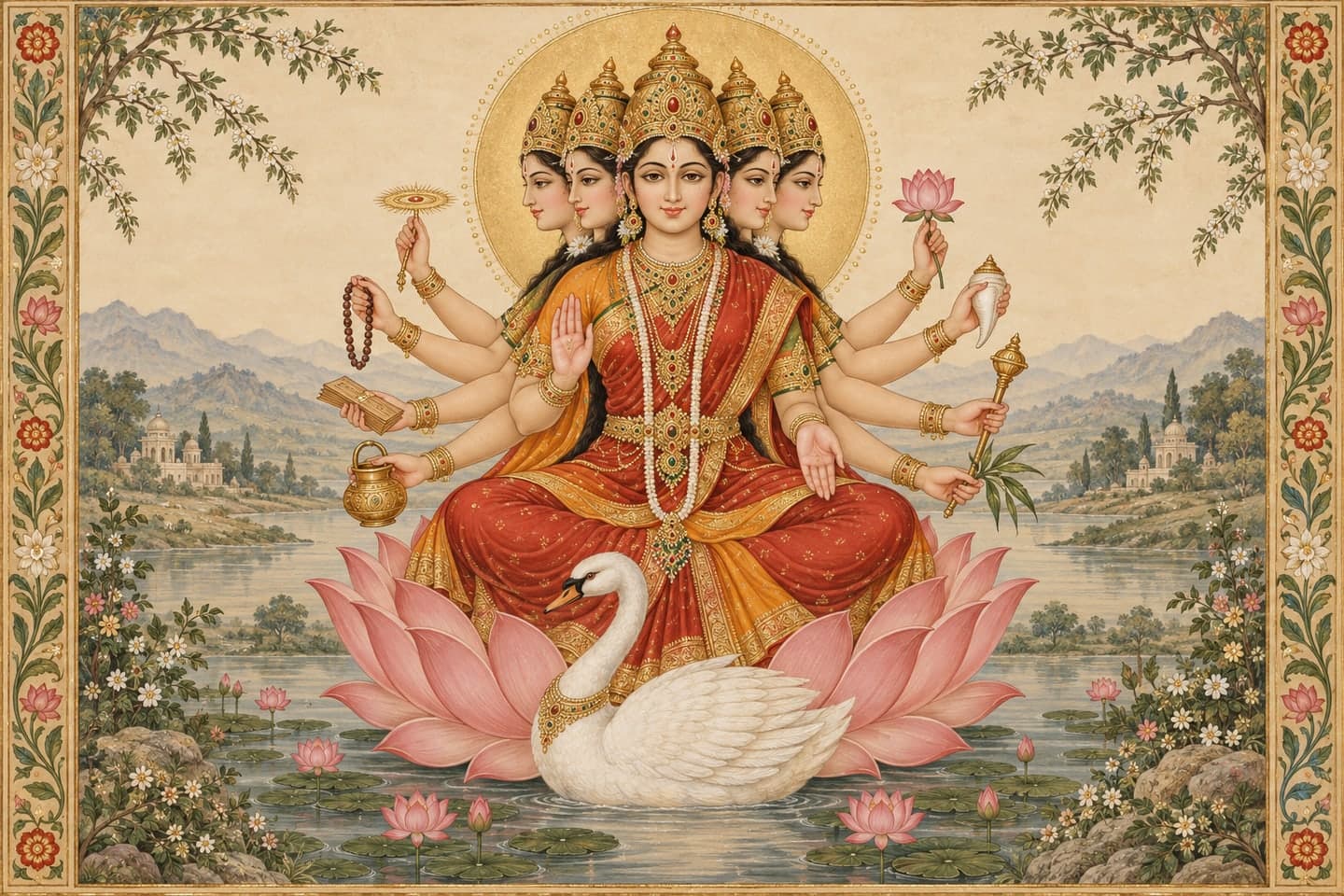
Sanskrit
ॐ भूर्भुवः स्वः । तत्सवितुर्वरेण्यं भर्गो देवस्य धीमहि । धियो यो नः प्रचोदयात् ॥
Transliteration
Oṃ bhūr bhuvaḥ svaḥ. Tat savitur vareṇyaṃ bhargo devasya dhīmahi. Dhiyo yo naḥ pracodayāt.
Meaning & interpretation
A devotional rendering prepared for this journal with AI assistance: We meditate on the worthy, radiant splendour of the divine Savitṛ. May that divine presence inspire and guide our understanding. Translations differ: the final prayer is also understood as an invocation to awaken our thoughts or insight.
The first prayer in our Gayatri series
The Sāvitrī is often called the Savitur Gayatri after its familiar opening, “tat savitur vareṇyaṃ.” This article introduces that Vedic prayer, its source, its words and its place in devotional practice. Other prayers called Gayatri have their own deities, sources and traditions; they should not be treated as interchangeable versions of this verse.
Origin: Rigveda 3.62.10
The core verse is found in the Rigveda, Mandala 3, Hymn 62, verse 10. Hindu tradition honours the sage Viśvāmitra as its seer. In this traditional understanding, a ṛṣi is a seer of sacred revelation; this attribution should not be confused with a modern claim about a precisely dated act of authorship.
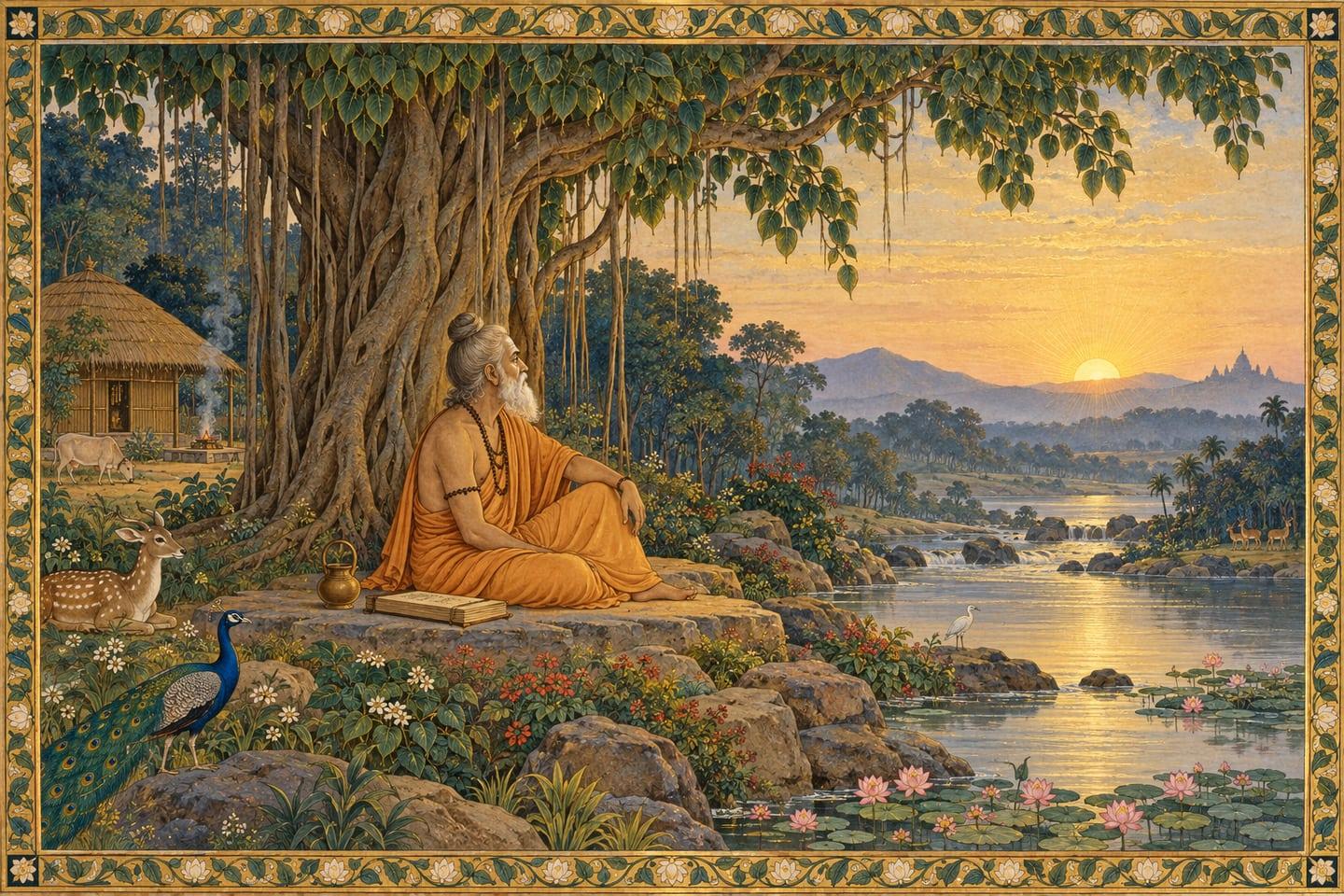
The Rigvedic verse begins with “tat savitur vareṇyaṃ.” The sacred syllable Om and the three utterances bhūr, bhuvaḥ, and svaḥ precede it in the familiar recitation shown above. These utterances are traditionally associated with earth, the intervening realm, and heaven. Distinguishing the verse from its recitational opening helps us read its source accurately.

Why the names Sāvitrī and Gāyatrī?
Sāvitrī names the prayer through its connection with Savitṛ, the Vedic deity invoked in the verse. “Savitur” is the form of that name heard within the mantra. Gāyatrī also names a Vedic poetic metre, conventionally described as three eight-syllable lines. Its name is therefore not limited to a single later devotional prayer.

Savitṛ and the image of light
The Vedic prayer addresses Savitṛ, associated with the sun’s animating and impelling power. The image of radiance can also become a focus for spiritual contemplation: light makes things visible, while insight makes understanding possible. This inward reading is a devotional interpretation of the prayer, rather than a separate line in its Sanskrit text.

Understanding the words
The words move from reverence toward a request for guidance. Vareṇyam conveys what is worthy of choosing or revering; bhargaḥ points to radiance or splendour; and dhīmahi is commonly rendered devotionally as “we meditate upon.” Dhiyo concerns our thoughts or understanding, while pracodayāt expresses the wish that they be inspired or impelled.
Spiritual and traditional significance
The mantra’s concluding request gives its contemplation a direction: may our understanding be guided. A reader can reflect on this as an invitation to discern carefully, question confusion, and bring greater sincerity to everyday decisions. This is a reflective application of the verse, not a promise of automatic results.

In Hindu practice, the Sāvitrī holds an important place in Sandhyā worship and in traditions of upanayana, where it is transmitted by a teacher. Daily recitation is often associated with dawn, noon, and dusk, although observances and interpretations vary between communities. Its enduring significance lies in the relationship between sacred sound, remembrance, and the aspiration toward illumination.

Practice note
Begin by reading the verse and its meaning slowly. The text here omits Vedic accent marks and is provided for study and devotional reflection. For the pronunciation, accents, and ritual observances of a particular tradition, learn from a knowledgeable teacher in that tradition.
Sources & references
Each reference describes its relevance. Classical texts, historical scholarship and modern technical documentation serve different purposes.